A warehouse clearance in Dubai starts with a scope: what's leaving, how much of it there is, and how a truck reaches it. Racking, pallets, old stock and packaging can usually go in one planned clearance. Chemicals, oils and other hazardous materials can't, and need a licensed specialist.
Warehouses in Al Quoz, Dubai Investments Park, Jebel Ali, Al Qusais and Dubai South get cleared for the same few reasons: a lease ending, a move to a bigger unit, a business closing or a backlog of dead stock. The steps are the same in each case.
Scoping a warehouse clearance
An accurate scope is what turns a warehouse clearance into a fixed price rather than an estimate. It needs three things: photos, rough volumes and access details.
Photos, volumes and access
- Wide photos of each bay or aisle, taken from the end so the depth shows
- Close-ups of anything heavy, such as machinery, metal stock or full pallets
- A rough count: bays of racking, number of pallets, shelving units, desks in the office area
- A note of anything staying, such as racking the landlord owns or stock you're moving
- The mezzanine, office and staff areas, which are easy to forget
Loading docks and vehicle size
Tell whoever is clearing the unit how vehicles get in. Is there a loading dock or a roller shutter at ground level? Is there a forklift on site, and someone to drive it? Are there height or width limits at the gate, and set hours for heavy vehicles in your industrial area? A dock and a forklift make heavy pallets much quicker to load.
Racking, shelving and pallets
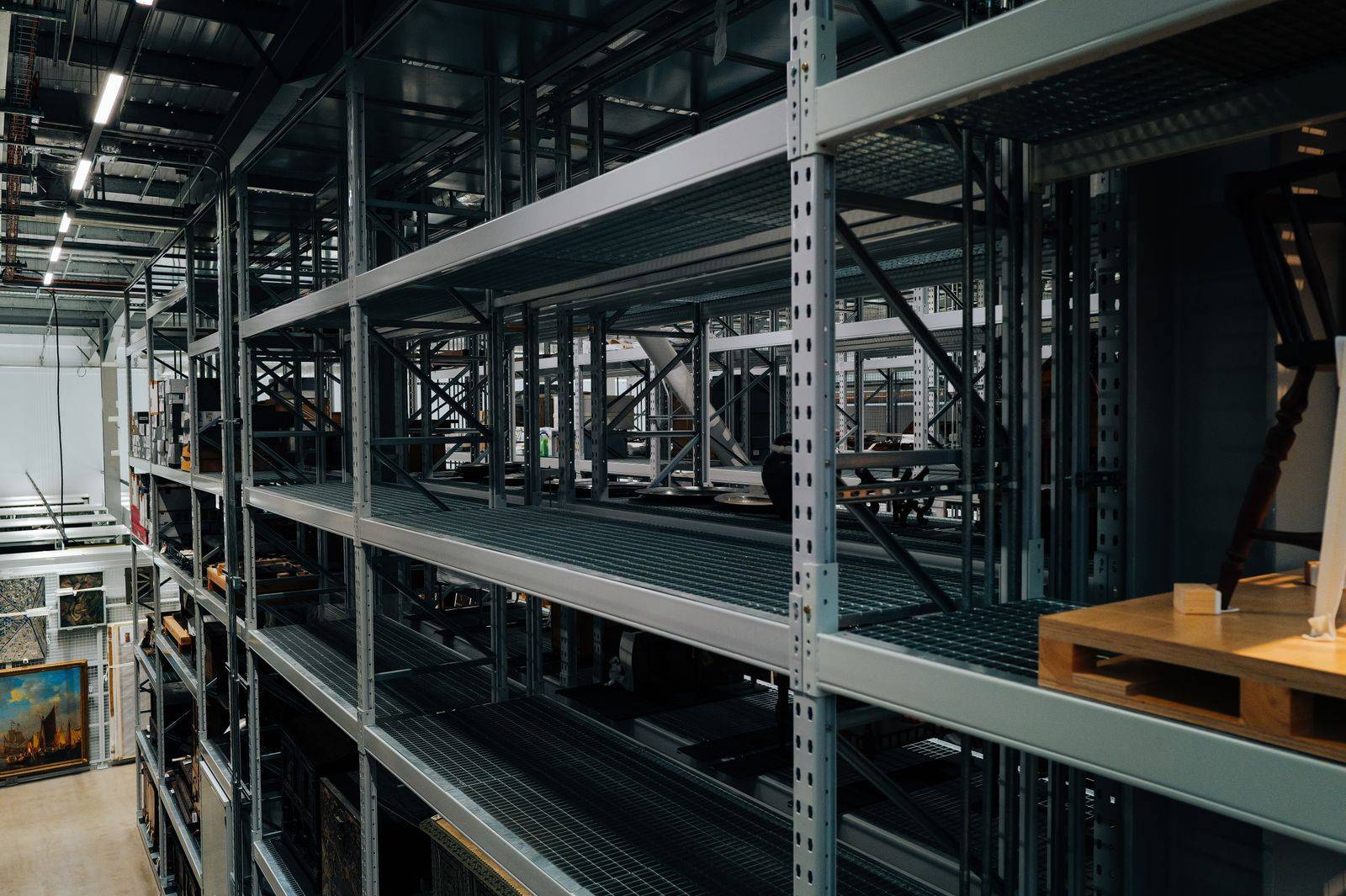
Racking is often the biggest single item in a warehouse clearance. Our crew can take down freestanding pallet racking and shelving, then load and remove it. Tell us the number of bays, the height and whether the uprights are bolted to the floor.
Before the racking comes down, check your lease. Floor anchors leave holes, and some landlords expect the floor made good at handover. That repair is a job for a contractor, so agree it with the landlord early.
Pallets come in two kinds. Sound wooden and plastic pallets often have value to pallet traders and other businesses, so it's worth offering them before the clearance. Broken pallets are waste. Stack them neatly in one place, because a loose heap takes far longer to load.
Old stock and packaging
Dead stock is the hardest part to plan, because it's tied up with decisions about money. Sort it into three groups before anyone quotes:
- Stock to sell, return to the supplier or move to another site
- Stock to donate, if it's usable and you're allowed to give it away
- Stock for disposal: damaged, expired or obsolete goods
Check supplier and brand agreements first. Some require branded or returned goods to be destroyed in a set way, with a certificate. We remove and dispose of stock, but we don't issue destruction certificates, so use a specialist for anything that needs one.
Packaging adds up quickly. Flatten and bale cardboard where you can, and keep shrink wrap, strapping and polystyrene apart from it. Clean, sorted cardboard is easier to recycle than a mixed pile.
What needs a licensed specialist
Hazardous materials don't belong in a general clearance. That includes chemicals, solvents, paints in bulk, used oils and lubricants, fuel, gas cylinders, batteries in quantity and anything with a hazard label. In Dubai, these go through companies licensed for hazardous waste collection and transport.
Identify hazardous items during the scope and keep them apart from everything else. A clearance crew can then work around them while the specialist handles their removal.
Business waste obligations: approved collectors
As a business, you're responsible for how your waste is handled, not only for getting it out of the unit. Dubai's waste law, Law No. 18 of 2024, requires a waste producer to transport the waste from its activities to disposal sites using authorised vehicles.
For hazardous waste, Dubai Municipality's technical guidelines go further. They make it the waste generator's responsibility to check the transporter's credentials against the municipality's published list of approved hazardous waste transporters. They also require businesses that generate hazardous waste to get a permit or NOC from the municipality before it's transported, disposed of or recycled.
- Ask any collector which waste types its licence covers
- Check hazardous waste transporters against the municipality's approved list
- Keep records of what was removed, when and by whom
- Don't let anyone leave waste on vacant land or beside the building
Handing the unit back
Once the clearance is done, walk the unit before you return the keys. Check the mezzanine, the office, the toilets and the yard, as well as the main floor. Sweep the floor, note any damage from racking or forklifts, and take dated photos of every area. If the lease requires repairs, such as filling anchor holes or removing signage, book a contractor for the days after the clearance, not the same day.
FAQs
Can you clear over several days?
Yes. Large warehouses are often cleared in phases, bay by bay, so the business can keep working or move stock out in stages. Tell us your deadline and any days the unit is unavailable, and we'll plan the visits around them.
Do you take pallets that are broken?
Yes, as part of the clearance. Stack them in one place and include them in your photos, so they're counted in the price. Sound pallets are worth offering to a pallet trader first.